





As the “traditional” respiratory season began during the COVID-19 pandemic, public health experts, infectious disease doctors and hospital administrators were gearing up for a “tripledemic”—they were anticipating months of fighting not only SARS-CoV-2, but also influenza and respiratory syncytial virus (RSV).
With the three viruses expected to surge across the country, experts were offering advice about protecting family, friends and colleagues. At the time, 12,000 people were dying from COVID-19 each day in the United States alone. Hospitals were barely handling the onslaught of incoming cases. What would they do if 200,000 or more people showed up at their doors with influenza or RSV? A “normal” flu season sees 100,000 to 710,000 hospitalizations and 36,000 to 51,000 deaths. A “normal” RSV season could hospitalize at least 120,000 people and kill 6,100.
Yet, to the relief of many, the tripledemic was not seen during the 2020-2021 respiratory season. So, what happened? Infectious Disease Special Edition spoke with three respiratory virus experts about what they saw, and why they think they saw it, and what that means for the future of influenza.
“The 2020 to 2021 season was the lowest influenza on record,” said William Schaffner, MD, FIDSA, a professor of medicine, Department of Infectious Diseases, and a professor of preventive medicine, Department of Health Policy, at Vanderbilt University School of Medicine, in Nashville, Tenn. “The curve was essentially flat. We even had some conversations with our colleagues in Canada, who said that the flu cases we were discovering were probably in error,” he jested.
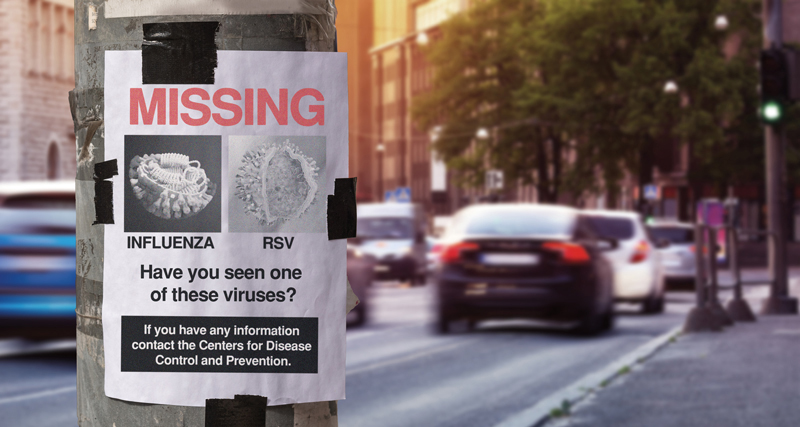
“Flu was not just mild; it was absent, because of the very things that drove people crazy about COVID: segregation and wearing masks,” explained Arnold S. Monto, MD, the co-director of the Michigan Center for Respiratory Virus Research and Response, as well as professor emeritus in epidemiology and public health at the University of Michigan, School of Public Health, in Ann Arbor.

Mitigating Factors
There probably were two factors at play, according to the experts. The first was viral exclusion or interference, which can occur when people or animals are exposed to multiple viruses simultaneously. As the organisms jockey for position, one becomes dominant and the others wait their turn, so to speak. This is seen frequently during normal flu seasons—one strain of flu, often influenza A, sweeps across the country first, and then influenza B comes through near the end of the season.
“I think that when there is a respiratory virus roaring through the community, it can be hard for other respiratory viruses to break in,” said Richard J. Webby, PhD, the director of the WHO Collaborating Centre for Studies on the Ecology of Influenza in Animals and Birds, and a member of the staff of St. Jude Children’s Research Hospital, in Memphis, Tenn.
“When you look at peaks of influenza A, influenza B or RSV over a winter season, more often than not, those peaks don’t overlay [one another]. One comes first and then when one is coming down, the other one will come up,” he said.

The other dynamic—and probably the biggest influencer—was the actions that were put into place to mitigate COVID-19. Social distancing and masking had much to do with stopping the spread of all the respiratory diseases, all three experts told Infectious Disease Special Edition.
“I think it was the unexpected consequence of everything that we were doing against COVID,” Dr. Webby said. “But influenza activity went to very low levels [that season] as did other respiratory viruses as well.”
Mitigation factors were important, according to Dr. Schaffner, because once people stopped wearing masks, attended church services and headed back to school, influenza quickly regained its place in the respiratory hierarchy.
“Quite clearly people were staying home [during COVID],” Dr. Schaffner said. “And most importantly, children were not going to school. They were not playing together, and of course, children have the great ‘distribution franchise’ … for influenza virus.”
One reason children are such efficient spreaders in the community is they shed flu virus for longer periods than adults do. While at school, daycare or play, they spread the virus among themselves and then bring it home to adult family and friends, Dr. Schaffner said.
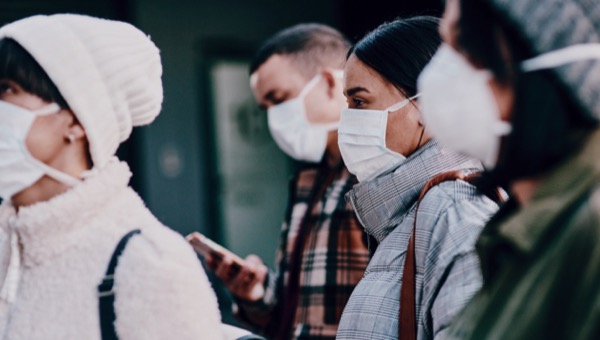
“So, it’s clear the opportunities to spread the virus were so profoundly reduced in 2021, and we did not have an influenza season,” he added.
“I don’t think it was the interference between COVID and flu. Most people think it was the lockdowns and the changes in patterns, particularly schools being closed because schools are where everything is usually being spread. Just look at rhinovirus. Rhinovirus season starts after school opens,” Dr. Monto said.
Another factor that typically affects influenza hospitalizations and deaths is vaccination, but in this case, influenza vaccination was down, which is another reason the experts point to nonpharmacologic mitigation factors. Influenza vaccination has been decreasing since the pandemic. The CDC estimates that in the 2023-2024 flu season, only 55.4% of children from 6 months through 17 years received a flu vaccination—a decrease of 2 percentage points compared with the previous flu season (57.4%) and a decrease of 8.3 percentage points compared with 2019-2020 (63.7%).
Flu vaccination coverage was also low among adults. Only 44.9% of adults ages 18 and older were vaccinated against flu, a decrease of 2.0 percentage points from the previous season (46.9%). Adults saw an initial increase in flu coverage right after the pandemic started, but coverage has continued to decline, according to the CDC (bit.ly/49s7iVu-IDSE).
Taking Its Course
To tease out what happened to the other respiratory viruses, an Israeli study examined hospital admissions related to respiratory diseases among children before and after the pandemic. They retrospectively reviewed medical records from November 2020 to January 2021, and compared them with the same periods during the previous two years. They found 1,488 hospitalizations due to respiratory illnesses: 632 in 2018-2019, 701 in 2019-2020, and 144 in 2020-2021. They attributed the significant decline in respiratory viral and bacterial coinfections during the pandemic to viral interference, as well as social distancing and wearing masks (Isr Med Assoc J 2023;25[3]:171-176).
This was reiterated in several studies, including a recent review in Emerging Infectious Diseases, which predicted a return to more normal flu seasons as the COVID-19 emergency abated (2022;28[2]:273-281). “During the coronavirus disease pandemic, nonpharmacologic interventions have prevented the circulation of most respiratory viruses. Once the sanitary restrictions are lifted, circulation of seasonal respiratory viruses is expected to resume and will offer the opportunity to study their interactions, notably with severe acute respiratory syndrome coronavirus 2.”
As predicted, flu did fight its way back into circulation. The following year, 2021-2022, influenza started later than usual, but in 2022-2023, it started earlier, as “though the virus was getting back into its rhythm,” Dr. Schaffner said, and the 2024-2025 season appears to be behaving “just the way a conventional flu season starts.”
Dr. Webby added: “I think because we stopped doing everything that we were doing during the height of the pandemic—we stopped wearing masks, we started traveling again—COVID settled into more peaks of activity rather than year-round activity, so all of those things that helped keep flu away were gone.”
A Prudent Response
Based on this experience and what they know about respiratory viruses, all three experts agreed that wearing a mask in public during respiratory season is a prudent thing to do, especially if a person is immunocompromised. They also reiterated the importance of staying home when people are sick to stop the spread of all respiratory viruses.
“I recommend a mask for people who are at increased risk of getting more severe disease should they become infected,” Dr. Schaffner said. They should ask themselves these questions: “Are they more likely to become seriously ill and require hospitalization and intensive care admission? Are they at increased risk of dying? Eighty percent of the deaths occur in people 65 and older.
“As a person who is in that group, when I go to the supermarket or the drugstore, or anywhere, I wear a mask,” he said. “So, I think it would be a good idea.”
The viruses are respiratory, and thus spread through airborne particles, reminded Dr. Monto; therefore, anything that reduces that spread is worthwhile. He said he doesn’t understand the resistance to wearing a mask, “because it does work. Why does a surgeon wear a mask in an operating room? Because we know that wearing masks helps to stop the spread of infection,” Dr. Monto said. “It’s not a total answer, but it’s a partial one.”
“In some parts of the world, wearing a mask is still a pretty common practice, so obviously, it does work,” Dr. Webby said, but he added that he thinks it’s the combination of actions that is important. “What impact does wearing a mask on its own have? I don’t think we know,” he said. “People are traveling or were still maybe a little more likely to go to work with a bit of the sniffles as opposed to staying home, so it is hard to tease those out in my mind, but it makes good sense to wear a mask.”
In addition, they said healthcare providers should continue to recommend vaccination against COVID-19 and influenza, as well as RSV, if eligible, because the vaccines help reduce the risk for hospitalizations and death.
Despite the best prognostications, flu is unpredictable, Dr. Schaffner reminded. Although everyone thought a tripledemic would occur, it didn’t. It wasn’t the end of flu by a long shot, and flu came back this season just as it always has.
Dr. Monto concurred: “There are a lot of people who like to say, ‘We understand this.’ But in reality, when you look at what happens, there is a lot we don’t understand. We observe, and we try to predict.”


This article is from the December 2024 print issue.