By Ethan Covey
Mutations in two positions of an rRNA gene can predict phenotypic erythromycin (ERY) resistance in Campylobacter isolates, according to a recent study.
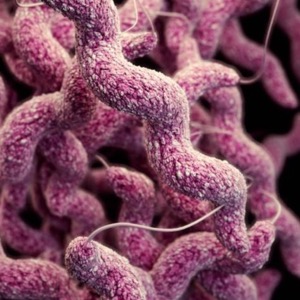
“Campylobacter species are among the most common causes of bacterial gastroenteritis [and] increasing rates of macrolide resistance are observed in these species,” the authors wrote.
A total of 109 human Campylobacter isolates sourced from Mayo Clinic (n=41) and the Minnesota Department of Health (n=68) were tested. They included 66 C. jejuni, 41 C. coli and two C. upsaliensis isolates.
DNA extraction was done using Maxwell 16 Cell DNA Purification Kits (Promega). Isolates from Mayo Clinic were prepared using NEBNext Ultra II kits (New England Biolabs) and sequenced using NextSeq P1 (Illumina). Data were analyzed with the CLC Main Workbench v23.0.5 (Qiagen). The Minnesota isolates were extracted using the QIAcube Classic (Qiagen) or MagnaPure LC (Roche), and were prepared with Nextera XT or DNA Prep kits followed by MiSeq sequencing.
Sixty-eight isolates (46 C. jejuni and 22 C. coli) were phenotypically ERY-resistant. They found 23S rRNA gene mutations at position 2075 in 97% of ERY-resistant isolates. Two C. upsaliensis isolates also had ERY MICs of 16 mcg/mL or higher with mutations in either position 2074 or 2075.
“Results of this study show that phenotypic ERY resistance can be predicted by analyzing mutations in the 23S ribosomal RNA gene at positions 2074 and 2075 in C. jejuni and C. coli, and suggest that this may generalize to C. upsaliensis,” the authors concluded at ASM Microbe.