

By Ethan Covey
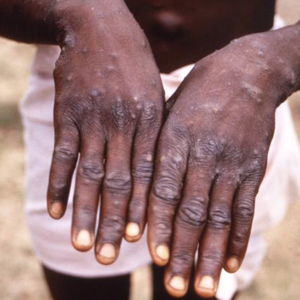
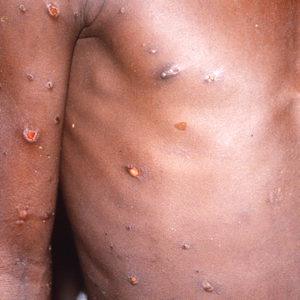
The risk for acquiring monkeypox in the United States remains extremely low, but the CDC recommended that clinicians be aware of the virus, particularly in people traveling from Africa (MMWR Morb Mortal Wkly Rep 2022;71:509-516).
“Monkeypox virus has re-emerged in parts of Africa, and as cases continue to occur, additional cases may be imported to the U.S. and other countries,” said Agam K. Rao, MD, an epidemiologist with the Division of
High-Consequence Pathogens and Pathology, National Center for Emerging and Zoonotic Infectious Diseases, CDC. “This report highlights why it’s important for clinicians to immediately report their suspicion for monkeypox to public health authorities, and outlines the various ways that hospitals and health departments can prepare if cases occur in their jurisdictions.”
Monkeypox typically is found in west and central Africa, and resulted in an outbreak in Nigeria during 2017-2018 that involved 118 confirmed cases. It had been 39 years since a human case was reported in Nigeria.
During 2018-2021, six cases were identified among people who traveled from Nigeria to other countries. Two of these cases resulted in secondary infections.
In the United States, this first case was identified in a man who traveled from Lagos, Nigeria to Dallas. Since then, another case occurred in the United States, also in a traveler from Nigeria. While a full report on that case has not yet been released, the CDC has issued a Level 1 (Watch) Travel Health Notice for travel to Nigeria (https://wwwnc.cdc.gov/travel/notices/watch/monkeypox-nigeria).
“The risk of acquiring monkeypox virus continues to be very low in the U.S.,” Dr. Rao said. However, he added, since the world is interconnected, occasional cases in travelers should be expected.
“Monkeypox can be a severe infection and some people with this disease have died,” Dr. Rao said. “To ensure the risk to others is low, clinicians should have a low bar for suspecting monkeypox in travelers returning from west and central Africa, notify health departments as soon as they suspect it, and ensure that suspected case patients are isolated.”
Clinicians should consider eliciting a one-month travel history from patients, particularly those who present with rashes or febrile illnesses, including in the emergency department.
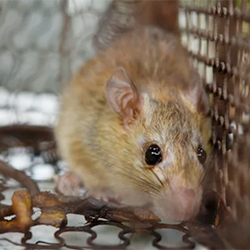
Currently, the animal reservoir for monkeypox virus is unknown, leading to confusion regarding routes of infection and how to best address these risks.
“We suspect it is small mammals,” Dr. Rao said, “but the specific mammal or mammals have not been identified, despite extensive ecologic investigations in Africa.”
Additionally, in Nigeria, cases seem to be occurring in urban areas—a change from cases in other countries, which have occurred in rural, forested areas. Patients in Nigeria do not routinely report contact with wild animals or other ill people.
These and other remaining questions regarding how easily monkeypox virus is transmitted between humans hopefully will be clarified via future research, Dr. Rao noted.