





Twenty-four patients who underwent cosmetic surgeries during 2023 in two clinics in Mexico developed Fusarium solani meningitis that was associated with the epidural anesthesia they received. Infectious disease specialists who helped manage the crisis discussed their experiences.
“Unfortunately, we are all veterans in treating this type of exposure, so we were attuned immediately to what was happening,” said Luis Ostrosky-Zeichner, MD, a professor and the chief of the Division of Infectious Diseases at McGovern Medical School at UTHealth Houston, and a co-author of a recent article about invasive fungal outbreaks in the United States over the past 15 years (Curr Opin Infect Dis 2024;37[3]:185-191).
On May 8, 2023, the CDC was alerted that two residents of Texas who received epidural anesthesia developed meningitis after having surgery at two private clinics: the River Side Surgical Center or Clinica K-3, in Matamoros, Tamaulipas, Mexico. Tom Chiller, MD, MPHTM, the chief of the CDC’s Mycotic Diseases Branch, learned of the cases through the Infectious Diseases Society of America’s Emerging Infections Network.
“We are constantly checking the messages in the morning, and in this instance, someone was asking about two cases of meningitis from patients returning from Mexico,” Dr. Chiller said. “It rang a bell because six months before, there was an outbreak in Durango that was associated with epidural anesthesia.”
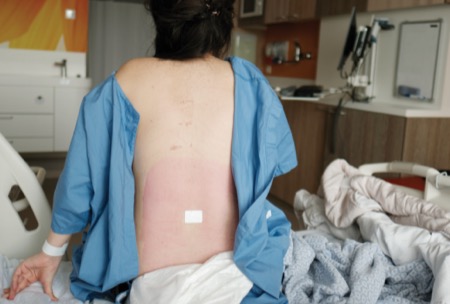
Between September 2022 and February 2023, 80 cases of fungal meningitis were identified in Durango, Mexico. All of the patients were from Mexico. Forty-one died, and the median length of hospitalization was 50.5 days compared with 38 days in survivors (Open Forum Inf Dis 2024;11[2]:ofad690).
The lessons learned from this experience helped lay the groundwork for developing guidelines that tracked down patients who were exposed and determine those who needed a lumbar puncture to test for meningitis, they explained.
“We literally had guidelines within a week of finding out about the new outbreak, and the CDC worked with the local health departments and the Mexican government to obtain lists of the involved patients so they could contact them,” Dr. Ostrosky-Zeichner said. “This all happened probably within two weeks after we developed the guidelines.”
Matamoros is directly across the U.S. border from Brownsville, Texas. Most of the patients who had traveled from the United States to the clinics underwent treatments known as “mommy makeovers,” such as tummy tucks and buttock augmentations, which are intended to restore the appearance of a woman’s body after childbirth. Dr. Chiller noted that one of the challenges in connecting with patients is the fact that many of them were Mexican Americans, and there were language barriers. In addition, some were uninsured and had trouble getting coverage for the lumbar punctures.
Ultimately, 233 people across 27 U.S. states, primarily in Texas, potentially were exposed between Jan. 1 and May 13, 2023, with 24 developing meningitis, and 15 dying from it. Both Drs. Ostrosky-Zeichner and Chiller also said many of the patients were already experiencing symptoms of F. solani meningitis, which is very resistant to current antifungal drugs.

“The two drugs we were recommending using, amphotericin B and voriconazole, which penetrate into the brain, still were not very good against this organism. Fortunately, we were able to get U.S. Food and Drug Administration expanded access to fosmanogepix, a drug currently being investigated in phase 3 clinical trials, and adding that seemed to significantly improve survival,” Dr. Chiller said.
Dr. Ostrosky-Zeichner said most areas do not have experts in mycology, and he and other specialists were available for consultations. In addition, he treated six of the women who developed meningitis, which he described as “incredibly distressing.”
“Most of them were young women with young children who just wanted to have a cosmetic procedure, and they were very sick,” Dr. Ostrosky-Zeichner said. “They were in communication with each other and kept hearing of other friends dying and getting worse, which took a mental toll.”
Although some patients recovered completely, many have lingering issues. For example, some have had strokes, underwent neurosurgery to insert shunts or are still on medication, he said.
“A lot of the patients that I still take care of have PTSD [post-traumatic stress disorder] and are just waiting to see when they are going to get sick again or relapse because we do not know if they are going to or not,” Dr. Ostrosky-Zeichner said.
Although the exact cause of the outbreak has not been proven, all cases have been linked to a single anesthesiologist who could have been using contaminated morphine that was not acquired through appropriate vendors, according to the physicians. The whereabouts of the anesthesiologist are currently unknown.
“She posted a video early on that was very emotional, saying she did not do anything wrong, but she has since disappeared,” Dr. Chiller said.
Each outbreak offers new lessons to be learned, and one of the biggest takeaways is the benefit of speed and teamwork. Dr. Ostrosky-Zeichner said documenting efforts and outcomes will help allow for faster movement in the event of the next crisis. He also stressed the importance of multidisciplinary work.
“I am a clinician, but I do not have boots-on-the-ground experience in Cameron County, where we saw a lot of these patients. The public health authorities knew how to talk to people and convince them to get tested, and the CDC people provided the bigger epidemiological and cross-national communication picture,” Dr. Ostrosky-Zeichner said.
The CDC estimates that millions of U.S. residents travel internationally for medical care every year to countries that include Argentina, Colombia, Cuba, the Dominican Republic, Ecuador, India, Malaysia, Mexico, Nicaragua, Singapore and Thailand. He and Dr. Chiller cautioned that people exploring medical tourism should research the facilities and physicians before undergoing any type of medical care.
“Try to do as much due diligence as you can on the place where you are going. You have to be careful because many of these places do not have anything close to the same standards that we do in the United States,” Dr. Chiller said.
Dr. Chiller reported no relevant financial disclosures. Dr. Ostrosky-Zeichner reported that he is an advisor for/consultant to Cidara, Enanta, Eurofins Viracor, F2G, Gilead, GSK, Melinta, Octapharma and Pfizer; and receives grant/research support from Pfizer, Pulmocide and Scynexis.



This article is from the April 2025 print issue.