


By Ethan Covey
People who received at least one dose of the Jynneos mpox vaccine (modified vaccinia Ankara vaccine, Bavarian Nordic) have reduced the odds of hospitalization compared with those who are unvaccinated, according to a study conducted by the California Department of Public Health (CDPH) and CDC.
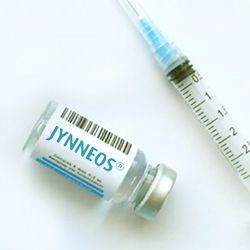
Individuals with and without HIV infection were studied (MMWR Morb Mortal Wkly Rep 2023;72[36]:992-996).
“This study confirms and supports our understanding of the importance of receiving the Jynneos vaccine to protect against more severe mpox requiring hospitalization,” Kayla Saadeh, MPH, a senior epidemiologist and mpox epidemiology unit lead of the CDPH, told Infectious Disease Special Edition.
The study included 4,611 people, 94.4% of whom were male, 45.2% were Hispanic or Latino, and 69.1% identified as gay, lesbian or same-gender loving.
Mpox virus infections occurred in 5% of those who received one dose of Jynneos vaccine, 1.7% of those who received two doses, 9.9% in people who received post-exposure prophylaxis (PEP) and 83.4% in unvaccinated individuals.
The odds of hospitalization among those with mpox who received one dose, two doses and PEP were 0.27, 0.20 and 0.42, respectively, compared with those who were unvaccinated. Hospitalization odds among HIV-positive mpox patients were 0.28 among those who had received one vaccine dose and 0.42 times for those who received PEP, compared with the unvaccinated cohort.
“The study confirms that people who did get mpox, including those with HIV, and who received the Jynneos vaccine were less likely to be hospitalized,” Ms. Saadeh said. “Further study is warranted to assess the impact of mpox vaccine on disease severity in more detail, including impacts on specific disease symptoms.”
Ms. Saadeh reported no relevant financial disclosures.