By Ethan Covey
Wastewater surveillance conducted in Oregon acted as an early indicator of the emergence of avian influenza in the state, identifying the virus well in advance of initial outbreaks in poultry and wild birds.
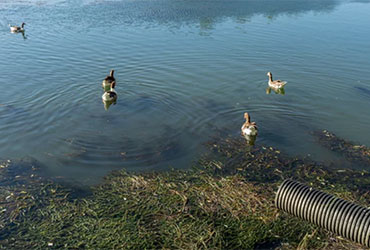
The study, experts say, highlights that wild birds are likely to be key contributors to the avian influenza virus subtype A(H5) in Oregon’s wastewater (MMWR Morb Mortal Wkly Rep 2025;74[6]:1020-106).
“This is the most comprehensive sample of retrospective influenza A(H5) subtype testing in wastewater in the U.S. to date and highlights the importance of considering wild bird inputs as a source of influenza A(H5) detections in wastewater,” said senior author Melissa Sutton, MD, Oregon Health Authority’s medical director of respiratory viral pathogens.
Oregon wastewater had been tested seasonally for influenza from Sept. 15, 2021, through June 24, 2022, and from Aug. 28, 2022, through April 30, 2023. Following this, year-round wastewater surveillance for flu viruses has been conducted since Oct. 1, 2023.
The retrospective analysis of 551 influenza A virus–positive wastewater surveillance samples taken from 20 sites in Oregon from Sept. 15, 2021, through July 11, 2024, resulted in a total of 21 avian influenza A(H5) subtype detections in 12 communities throughout the state.
Wastewater surveillance detected influenza A(H5) well before other outbreaks occurred: roughly six weeks before the state’s first highly pathogenic avian influenza (HPAI) A(H5N1) outbreak in domestic poultry, seven weeks before the detection of the virus in wild birds in the state and two years before the first HPAI A(H5N1) in U.S. cattle. To date, Oregon has not detected HPAI A(H5N1) in either dairy cattle or milk.
“The interpretation of influenza A(H5) in wastewater is complex and requires a thorough and thoughtful ‘One Health’ approach incorporating human and animal expertise—our study demonstrates such an approach,” Dr. Sutton said.
While wastewater has the potential to strengthen continued surveillance efforts for avian influenza, the study authors noted that current inability to differentiate between human and animal sources via wastewater testing is a limitation.
“Future sequencing of influenza in wastewater may offer important insight into this area,” Dr. Sutton said.
Dr. Sutton reported no relevant financial disclosures.