By IDSE News Staff
Pet dogs and cats play an important role in the spread of antibiotic-resistant bacteria, suggests new research presented at the ESCMID Global Congress (formerly ECCMID), in Barcelona, Spain (poster 1868).
The study found evidence of multidrug-resistant (MDR) bacteria being passed between sick cats and dogs and their healthy owners in Portugal and the United Kingdom, raising concerns that pets may act as reservoirs of resistance aiding in the spread of resistance to vital medicines.
“Recent research indicates that the transmission of antimicrobial resistance (AMR) bacteria between humans and animals, including pets, is crucial in maintaining resistance levels, challenging the traditional belief that humans are the main carriers of AMR bacteria in the community,” said lead researcher Juliana Menezes, a PhD candidate at the Antibiotic Resistance Lab at the Centre of Interdisciplinary Research in Animal Health, Faculty of Veterinary Medicine, University of Lisbon, in Portugal.
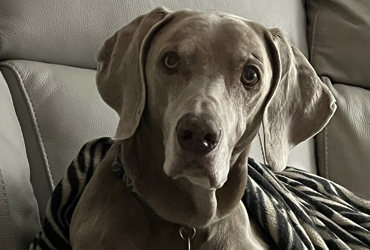
Ms. Menezes and colleagues tested fecal and urine samples and skin swabs from dogs and cats and their owners for Enterobacterales resistant to common antibiotics.
They focused on bacteria resistant to third-generation cephalosporins, a class of drugs labeled critically important for human medicine by the World Health Organization, and carbapenems, also critical and considered a last line of defense when other antibiotics have failed.
The prospective longitudinal study involved five cats, 38 dogs and 78 people from 43 households in Portugal and 22 dogs and 56 people from 22 households in the United Kingdom.
All participants were healthy. All pets had skin and soft tissue infections or urinary tract infections.
- In Portugal, one dog (1/43 pets; 2.3%) was colonized by an OXA-181-producing MDR Escherichia coli strain. OXA-181 is an enzyme that confers resistance to carbapenems.
- Three cats and 21 dogs (24/43 pets; 55.8%) and 28 owners (28/78 owners; 35.9%) harbored extended-spectrum beta-lactamase (ESBL)-/AmpC-producing Enterobacterales, which are resistant to third-generation cephalosporins.
- In five households, one home with a cat and four with dogs, both the pets and owners were carrying ESBL-/AmpC-producing bacteria. Genetic analysis showed the strains to be the same, indicating that the bacteria passed between the pets and owners.
- In one of these five households, a dog and owner also had the same strain of antibiotic-resistant Klebsiella pneumoniae.
- One U.K. dog (1/22 pets; 14.3%) was colonized by two strains of MDR E. coli–producing NDM-5 (New Delhi metallo-beta-lactamase-5). These E. coli were resistant to third-generation cephalosporins, carbapenems and several other families of antibiotics.
- ESBL-/AmpC-producing Enterobacterales were isolated from eight dogs (8/22 pets; 36.4%) and three owners (3/24 owners; 12.5%).
- In two households, the dogs and owners were carrying the same ESBL-/AmpC-producing bacteria.
However, it was not possible to prove the direction of transmission in three of the homes in Portugal. The timing of the positive tests for the ESBL-/AmpC-producing bacteria strongly suggested that the bacteria were being passed from pet (two dogs and one cat) to human in these cases.
“Our findings underline the importance of including pet-owning households in national programs that monitor levels of antibiotic resistance,” Ms. Menezes said. “Learning more about the resistance in pets would aid in the development of informed and targeted interventions to safeguard both animal and human health.”
Bacteria can be passed between pets and humans by petting, touching or kissing as well as through the handling of feces. To prevent transmission, the researchers recommended owners practice good hygiene, including washing their hands after petting their dogs or cats and after handling their waste.
“When your pet is unwell, consider isolating them in one room to prevent the spread of bacteria throughout the house, and clean the other rooms thoroughly,” Ms. Menezes suggested.
All dogs and cats were successfully treated for their infections. The owners did not have infections and so did not need treatment.
Antibiotic resistance is reaching dangerously high levels around the world. Drug-resistant infections kill more than 1.2 million people a year globally, and, with the figure projected to rise to 10 million by 2050 if no action is taken, the WHO classes antibiotic resistance as one of the greatest public health threats facing humanity.