By Ethan Covey
Awareness of daily oral (DO) HIV pre-exposure prophylaxis (PrEP) is high among Black and Hispanic men in the United States, yet use remains low, according to data presented at the 2022 IDWeek conference, held in Washington, D.C.
Although use of DO PrEP in the United States has increased during recent years, racial disparities still exist, such as Black and Hispanic people having lower rates of PrEP access despite being disproportionately affected by HIV (http://www.cdc.gov/hiv/library/reports/hiv-surveillance.html; MMWR Morb Mortal Wkly Rep 2018;67[41]:1147-1150).
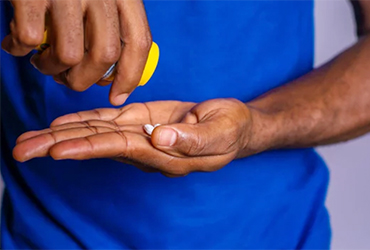
Researchers recruited participants via a geographically targeted social media campaign using Facebook, Instagram, Grindr and Tinder, and completed an online survey focused on demographics, sexual health and behavior, healthcare access, PrEP usage and awareness, and PrEP intention and preferences (poster 2085). Inclusion criteria consisted of being cisgender, self-identifying as Black and/or Hispanic ethnicity, having no prior HIV diagnosis, and reporting anal or vaginal sex within the previous six months.
The researchers conducted a preliminary analysis of the data collected from November to December 2021 from 1,365 cisgender Black and Hispanic men.
Key findings included the proportion of participants who had spoken with a healthcare provider (42%), or knew someone currently on PrEP (40%), was much lower than those with overall PrEP awareness (67%), according to lead researcher Tonia Poteat, PhD, an associate professor in the Department of Social Medicine at the University of North Carolina at Chapel Hill.
Current PrEP use was low, 25% of participants reported having used PrEP and only 16% reported current PrEP use. Among those who had discontinued PrEP, 32% reported that the price was too high, and 28% reported experiences with—or concerns regarding—side effects.
From the 42% of men who had spoken to a healthcare provider about PrEP, most of them (66%) reported that their provider had initiated the conversation.
Overall, a broad majority showed interest in long-acting (LA) PrEP (74%), and when asked about preferred PrEP options, 60.2% chose LA PrEP, 7.4% chose DO PrEP and 27.5% noted that they preferred neither option. The high interest in LA PrEP observed may provide an opportunity to increase overall PrEP use in this population.
“Interest in LA PrEP was high, and future studies are needed to explore willingness to start in the immediate future, as well as actual uptake, now that LA PrEP is available,” Dr. Poteat said.
Dr. Poteat is a consultant to ViiV Healthcare.