By Landon Gray
An Ebola outbreak has been declared by health officials in Uganda after a confirmed case of Sudan ebolavirus was documented in the Mubende district, located in the central part of the country, according to the World Health Organization (WHO).
The case was confirmed by the Uganda Virus Institute after testing a sample taken from a 24-year-old man. Before that, the National Rapid Response team had been recently investigating six suspicious deaths occurring in the same district. Currently, there are eight suspected Ebola patients receiving care in a health facility.
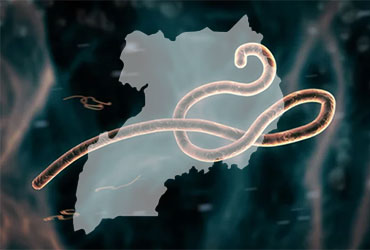
“This is the first time in more than a decade that Uganda is recording an outbreak of Sudan ebolavirus,” said Matshidiso Moeti, MD, the WHO regional director for Africa, in Brazzaville, Republic of the Congo. “We are working closely with the national health authorities to investigate the source of this outbreak while supporting the efforts to quickly roll out effective control measures.”
In the past, there were seven Sudan ebolavirus outbreaks—four in Uganda and three occurring in Sudan. The last reported outbreak of Sudan ebolavirus in Uganda was in 2012. Since then, the country also experienced a Zaire ebolavirus outbreak in 2019 when the virus was imported from the neighboring country, the Democratic Republic of the Congo. At that time, the Democratic Republic of the Congo was battling a significant epidemic in its northeastern region.
WHO is currently assisting Ugandan health authorities with the investigation and is deploying WHO staff to the affected region. WHO has also dispatched supplies to support the care of infected patients, including a tent to house isolated patients.
“Uganda is no stranger to effective Ebola control. Thanks to its expertise, action has been taken to quickly detect the virus and we can bank on this knowledge to halt the spread of infections,” Dr. Moeti said.
There are a couple of viable vaccination options in the fight against Ebola infection—rVSV-ZEBOV (Ervebo, Merck) and a vaccine regimen from Johnson & Johnson. Ring vaccination of high-risk people with rVSV-ZEBOV vaccine has been reported to be highly effective in controlling the spread of Ebola in recent outbreaks in the Democratic Republic of the Congo and other countries. However, rVSV-ZEBOV has only been approved to protect against the Zaire ebolavirus and the Johnson & Johnson vaccine has yet to be specifically tested against Sudan ebolavirus.
In March, the Advisory Committee on Immunization Practices (ACIP) broadened its recommendations regarding who should receive pre-exposure vaccination against Ebola virus disease in the United States to include two additional groups of people: healthcare personnel at special pathogens treatment centers, and laboratory workers and support staff at Laboratory Response Network facilities.
“Given what we know about the severity of Ebola virus disease, and the efficacy of the ERVEBO vaccine, this new expansion of recommendations aims to protect those U.S. workers who are deemed at high risk for exposure to Ebola virus,” Jason H. Malenfant, MD, an epidemic intelligence service officer in the Viral Special Pathogens Branch at the CDC, in Atlanta, told Infectious Disease Special Edition.
Reported case fatality rates of past Sudan ebolavirus outbreaks have varied from 41% to 100%, but early initiation of supportive treatment has been shown to significantly decrease the risk for death from Ebola infection.