By IDSE News Staff
The CDC will expand wastewater testing for poliovirus in certain communities across the United States, the agency said.
In September, New York Gov. Kathy Hochul declared a State Disaster Emergency and advised residents to ensure they are vaccinated against polio after evidence of circulating poliovirus continued. A single case of paralytic polio in an unvaccinated adult was confirmed in Rockland County, New York.
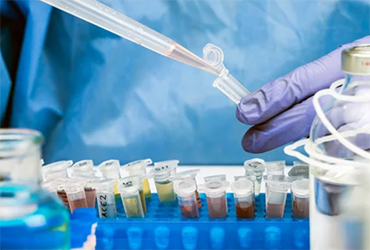
The CDC said the findings from the strategic wastewater testing effort will assist public health officials in prioritizing vaccination efforts in identified jurisdictions of concern. Testing will occur in selected counties with potentially low polio vaccination rates, or counties with possible connections to the at-risk New York communities linked to the case of paralytic polio.
After initiation, testing will last for at least four months, the CDC said.
The Michigan Department of Health and Human Services (MDHHS) and the Philadelphia Department of Public Health (PDPH) were among the first to explore strategies to begin collecting wastewater samples in specific communities to be analyzed at the CDC’s polio laboratory. The MDHHS and PDPH are also helping the CDC identify other communities with low polio vaccination rates that also have wastewater sampling sites.
Wastewater testing for poliovirus is not the same as testing for other pathogens, such as COVID-19, according to the CDC. There are strict laboratory safety requirements for poliovirus wastewater testing, and it is not routinely or broadly recommended. However, strategic use of wastewater testing in limited at-risk communities may help determine whether the virus is present in other parts of the country and can be utilized to bolster targeted vaccination efforts, the agency said.
Although wastewater testing cannot specifically identify an infected person or how many people are infected, it can reveal that someone in the community is shedding the virus and assist health officials in their investigations of suspected polio cases.
“Wastewater testing can be an important tool to help us understand if poliovirus may be circulating in communities in certain circumstances,” said José R. Romero, MD, FAAP, FIDSA, FPIDS, FAAAS, the director of the CDC’s National Center for Immunization and Respiratory Diseases, in Little Rock, Ark.
More than 92% of Americans were vaccinated against polio during childhood, so the risk to the public remains low.
“Vaccination remains the best way to prevent another case of paralytic polio, and it is critically important that people get vaccinated to protect themselves, their families and their communities against this devastating disease,” Dr. Romero added.
Over the coming months, the CDC will continue to help the community test wastewater and respond if they find a positive result. They will also help increase vaccination rates in these communities, if requested, the agency said.