

By IDSE News Staff
The California Department of Public Health reported the first known case of clade I mpox in the United States. The agency said the case occurred in a traveler and is related to an ongoing outbreak of clade I mpox in Central and Eastern Africa.
The patient had recently traveled from Eastern Africa and was treated at a local medical facility and released shortly after returning to the United States. Since then, the person has isolated at home, is not on treatment specific for mpox and symptoms are improving.
Based on travel history and symptoms, the patient specimens were tested and confirmed for the presence of clade I mpox. Specimens are being sent to the CDC for additional viral characterization, and the CDC is working with California public health officials to trace potential contacts.
The risk for clade I mpox remains low in the United States, according to the CDC.
Casual contact is unlikely to pose significant risks for transmission of mpox. People at risk should:
- avoid close contact with people who are sick with symptoms of mpox, including those with skin or genital lesions;
- avoid contact with contaminated materials, such as clothing, bedding, toothbrushes and sex toys, used by people who are sick; and
- receive mpox vaccination if you are eligible.
There are two types of mpox, clade I (with subclades Ia and Ib) and clade II (with subclades IIa and IIb). The lesions look similar, according to the CDC. Outbreaks from the different subclades can have different characteristics, such as who they affect, how they’re spread or how many deaths they cause. Although clade II mpox has been circulating in the United States since 2022, clade I has never been reported in the United States before now.
Travel-associated cases of subclade Ib have been reported in Germany, India, Kenya, Sweden, Thailand, Zimbabwe and the United Kingdom. Historically, clade I mpox has caused more severe illness and deaths than clade II mpox; however, recent data demonstrate that infections from clade I mpox in the current outbreak may not be as clinically severe as in previous outbreaks.
Although outbreaks of clade I mpox used to have death rates between 3% and 11%, more recent outbreaks have had death rates as low as 1% when patients received good medical oversight and supportive clinical care. Death rates are expected to be much lower in countries with stronger healthcare systems and treatment options, including the United States. The death rate for subclade Ib is less than 1%.
The recent travel-associated clade I mpox cases outside of Africa have all been attributed to subclade Ib; there have been no deaths associated with these cases, and available data for a subset have detailed relatively mild disease courses.
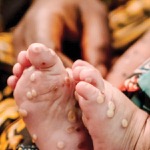
People with mpox often get a rash that may be located on the hands, feet, chest, face, mouth and/or near the genitals, including the penis, testicles, labia, vagina and anus. The incubation period is three to 17 days. During this time, a person does not have symptoms and may feel fine.
Earlier this year, the CDC conducted a risk assessment that included epidemiological data from Central and Eastern Africa, data from the ongoing mpox outbreak in the United States caused by clade IIb, and historical data on clade I mpox outbreaks in the Democratic Republic of the Congo and other affected countries and still characterizes the risk to the general population in this country as low. In addition, CDC simulations of clade I outbreaks indicate that close-contact transmissions within and between households are unlikely to result in a large number of mpox clade I cases in the United States.
In Sweden, Thailand, Germany and India, there was no apparent onward spread of the virus, and the onward spread in the United Kingdom has been limited to household contacts so far.
The CDC continues to work in Central and Eastern Africa to help stop mpox transmission in those countries by providing laboratory training and supplies for diagnostic testing, including genetic sequencing. The agency is also training front-line health and epidemiological workers for surveillance in people and animals, support for infection prevention and control, risk communication and community engagement, and direct technical assistance in outbreaks, as well as research collaborations.
Guidance for people traveling to Central and Eastern Africa is available here (https://wwwnc.cdc.gov/travel/notices/level2/clade-1-mpox-central-eastern-africa). The CDC continues to recommend that clinicians request expedited clade-specific testing for suspect clade I mpox cases with a travel history to Central and Eastern Africa.
Wastewater surveillance is also being done to provide an early warning of mpox activity and spread in communities, the agency said.