By IDSE News Staff
Mice administered raw milk samples from dairy cows infected with H5N1 influenza experienced high virus levels in their respiratory organs and lower virus levels in other vital organs (N Engl J Med 2024 May 24. doi: 10.1056/NEJMc2405495).
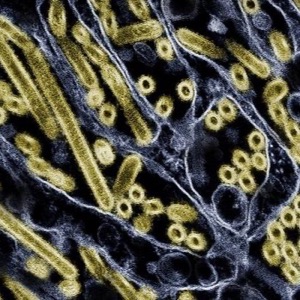
Colorized transmission electron micrograph of avian influenza A H5N1 virus particles (gold), grown in Madin-Darby Canine Kidney (MDCK) epithelial cells. Microscopy by CDC; repositioned and recolored by NIAID.
Credit: CDC and NIAID
Researchers from the University of Wisconsin-Madison and Texas A&M Veterinary Medical Diagnostic Laboratory fed droplets of raw milk from infected dairy cows to five mice. The animals demonstrated signs of illness, including lethargy, on day 1 and were euthanized on day 4 to determine organ virus levels. The researchers discovered high levels of virus in the animals’ nasal passages, trachea and lungs and moderate-to-low virus levels in other organs, consistent with H5N1 infections found in other mammals.
In addition to the mice studies, the researchers also determined the temperatures and time intervals inactivate H5N1 virus in raw milk from dairy cows. Four milk samples with confirmed high H5N1 levels were tested at 63 degrees Celsius (145.4 degrees Fahrenheit) for 5, 10, 20 and 30 minutes, or at 72 degrees C (161.6 degrees F) for 5, 10, 15, 20 and/or 30 seconds. Each of the time intervals at 63 degrees C successfully killed the virus.
At 72 degrees C, virus levels were diminished but not completely inactivated after 15 and 20 seconds. The authors emphasize, however, that their laboratory study was not identical to large-scale industrial pasteurization of raw milk and reflect experimental conditions that should be replicated with direct measurement of infected milk in commercial pasteurization equipment.
In a separate experiment, the researchers stored raw milk infected with H5N1 at 4 degrees C (39.2 degrees F) for five weeks and found only a small decline in virus levels, suggesting that the virus in raw milk may remain infectious when maintained at refrigerated temperatures.
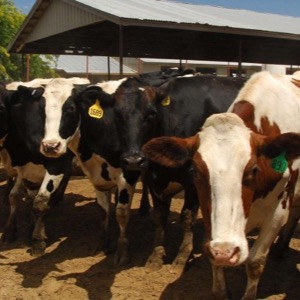
Since 2003, H5N1 influenza viruses have circulated in 23 countries, primarily affecting wild birds and poultry with about 900 human cases, primarily among people who have had close contact with infected birds. In the past few years, however, highly pathogenic HPAI H5N1 has infected more than 50 animal species, and in late March, the United States reported a viral outbreak among dairy cows in Texas.
To date, 52 cattle herds across nine states have been affected, with two human infections detected in farm workers with conjunctivitis. Although the virus has so far shown no genetic evidence of acquiring the ability to spread from person-to-person, public health officials are closely monitoring the dairy cow situation as part of overarching pandemic preparedness efforts.