

By Marie Rosenthal, MS
Avian influenza was detected by wastewater surveillance before the first reported outbreak among Texas dairy cattle earlier this year, according to new findings presented at IDWeek 2024.
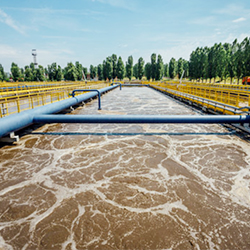
Researchers found a biomarker for avian flu in Texas wastewater treatment plants days before the outbreaks were reported in cattle. Two of three wastewater treatment plants with H5N1 biomarkers confirmed animal protein, which was not due to birds, had already left processing facilities, including dairy farms.
The researchers sought to explain unseasonal increases in influenza A virus seen in Texas wastewater treatment plants early this year. They designed and distributed to wastewater treatment plants a test for the H5 hemagglutinin gene found in avian influenza. Clinical data on influenza-related health care visits were used with compare influenza A virus increases in wastewater with confirmed cases of influenza in humans.
“We've demonstrated that perhaps most convincingly with H5N1, that we've been able to detect avian influenza markers well before clinical cases or the detection in cattle in 32 locations across eight states,” said Alessandro Zulli, PhD, a postdoctoral fellow at Stanford University and presenting author of the study.
The researchers said the findings demonstrate the utility of wastewater surveillance as a tool to track zoonotic influenza in agricultural facilities. Broader use of wastewater surveillance for zoonotic influenza could provide an early warning of outbreaks before symptoms appear in livestock or humans.
Dr. Zulli said wastewater surveys can provide real time information for public health to enable them to respond more quickly.
“It’s really shown the public health utility of wastewater monitoring rather than just the theoretical viability of it. So to me, wastewater monitoring remains the fastest, most unbiased method to actually measure the prevalence and spread of pathogens in a population. And leveraging this could have enormous implications for understanding the spread of illnesses and implementing interventions like the ones we have for H5N1, this technology can be expanded to a variety of human illnesses,” he said.
“And the more resources we put into it, the more we'll be able to get out of it, implement non-pharmaceutical interventions early, and both save lives and reduce costs,” he said.