By Landon Gray
A confirmed case of monkeypox is being investigated by the CDC in collaboration with the Massachusetts Department of Public Health.
Massachusetts testing identified orthopoxvirus on May 17, 2022, and CDC labs confirmed monkeypox the next day, according to the CDC. The Massachusetts resident recently traveled to Canada via private transportation.
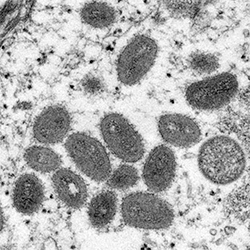
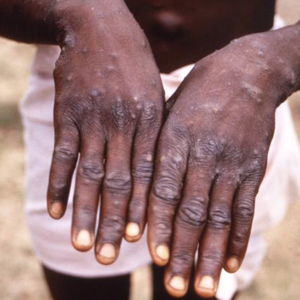
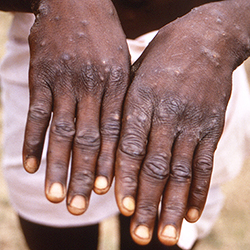
Monkeypox is a rare but potentially serious virus, causing an infection that usually presents with flu-like symptoms and lymph node swelling, and then advancing to a widespread rash. After a 40-year absence, monkeypox reemerged in 2017, in Nigeria. Since 2017, there have been 450 cases reported in Nigeria and at least eight exported cases reported internationally.
In 2003, a monkeypox outbreak in the United States was caused by humans coming in contact with pet prairie dogs that had been co-housed with monkeypox-infected smaller mammals imported from Ghana.
The CDC is also tracking multiple clusters of monkeypox reported recently in countries that typically do not report monkeypox—Portugal, Spain and the United Kingdom. The CDC said it is not clear how people in these clusters were exposed, but reported cases include self-identified men who have sex with other men, although the correlation remains unclear at this time.
In addition, the WHO was notified of two lab-confirmed and one probable cases of monkeypox from the same household in the United Kingdom. Four additional lab-confirmed cases were reported among Sexual Health Services attendees, and included a vesicular rash illness in gay, bisexual and other men who have sex with men.
Regardless of sexual orientation factors, the CDC said anyone can transmit monkeypox through contact with body fluids or shared items, such as clothing and bedding that have been contaminated with fluids or sores from a person infected with monkeypox. Like COVID-19, the monkeypox virus also can spread through respiratory droplets in the air of a close setting (i.e., the home or a healthcare setting).
The CDC alerted healthcare providers in the United States to watch for patients who present with rash illnesses consistent with monkeypox regardless of travel status or other risk factors associated with monkeypox. The CDC said genital lesions and rash that were observed in some monkeypox patients could be easily mistaken for other more common infections such as syphilis, herpes simplex virus infection, chancroid and varicella zoster.
As soon as monkeypox is suspected, healthcare providers should alert the CDC or state health department immediately. The patients should be isolated and contained in a negative-pressure room, and all staff should be made aware of the importance of wearing appropriate personal protective equipment each time they encounter suspected monkeypox cases.
The monkeypox virus can be killed by commonly used household disinfectants, the CDC said. It also advised any individual who may have started showing symptoms of monkeypox, especially gay, bisexual or other men who have sex with men and those in close contact, should watch for any unusual rashes or lesions and contact their healthcare provider for a risk assessment.