By Ethan Covey
Because most Ebola outbreaks since 2021 have been limited and promptly contained, 95% of vaccines from the International Coordinating Group (ICG) on Vaccine Provision stockpile have been repurposed for preventive vaccination.
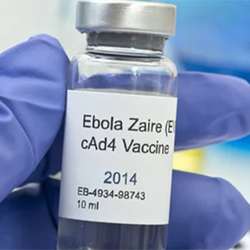
Doing so, experts said, has aided in transmission prevention and maximized both the benefits and cost efficiency of the stockpile (MMWR Morb Mortal Wkly Rep 2024;73[16]:360-364).
“While cases of Ebola virus disease are rare, they are fatal about half the time—that is why it’s important both to stop outbreaks quickly and to prevent them in the first place,” said Ruth Kallay, MPH, an epidemiologist with the CDC Global Immunization Division. “Fortunately, recent outbreaks have been both small in number and quickly contained, so only a very small proportion of the global Ebola vaccine stockpile was needed to respond to those outbreaks.”
Since 2021, a total of 145,690 doses have been shipped from the ICG stockpile. Of these, 139,120 (95%) have been repurposed for preventive vaccination, while 5% (6,570) were used in response to active outbreaks.
“Countries at risk for Ebola outbreaks should request and use vaccine doses from the stockpile for preventative vaccination among high-risk groups before another outbreak,” Ms. Kallay said.
However, Ms. Kallay said the CDC report raised two major questions that still need to be explored.
“The first is to evaluate how well Ebola vaccines prevent outbreaks,” she said. “We already know that vaccination reduces disease and death during Ebola outbreaks. But considering how rare the disease is, we don’t currently know how many cases are prevented when Ebola vaccines are used outside of outbreaks.”
The second question, she said, is about how long Ebola vaccines provide protection, and how effective the vaccines are in real-world situations.
“Knowing this will help us understand whether booster doses are also needed,” she said.