






Ever wondered why mosquitos are biting you all evening, but don’t seem to bother the person next to you? It could be the way you smell, according to a new study (Cell Rep 2023;42[2]:112101. doi: 10.1016/j.celrep.2023.112101).
Anopheles gambiae, a family of mosquitoes that causes malaria, has three types of receptors—odorant, gustatory and ionotropic—on the surface of its neurons in its organs that sense odor. Ionotropic receptors respond to acids and amines, which are found in human skin.
These receptors have been known to work with “partner” receptors to respond to odors, “kind of like a dance party,” said researcher Christopher Potter, PhD, an associate professor of neuroscience at the Johns Hopkins University School of Medicine, in Baltimore.
Dr. Potter and his colleagues sought to understand why mosquitoes may be more attracted to one person than another by using fluorescence in situ hybridization. This technique pinpoints RNA, not just the receptors. A link between RNA and ionotropic receptors would mean the neurons are highly likely to be producing such receptors.
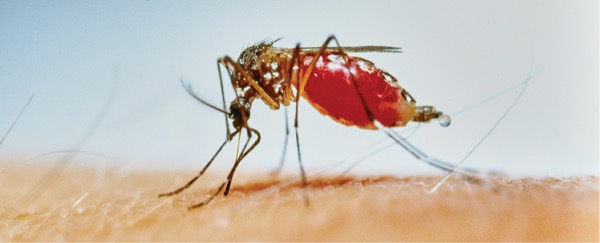
They hypothesized there would be similar amounts of ionotropic receptor-laden neurons in each segment of the antennae. To the contrary, most ionotropic receptors were found in the distal part of the antennae, farthest away from the head, while some were also found in the proximal part of the mosquito.
The findings show mosquito antennae are much more complex than previously thought, according to Dr. Potter.
The researchers identified pairings of receptors that predicted if an ionotropic receptor would respond to acids or amines. These were verified using genetic engineering to visualize the responses of an ionotropic receptor called Ir41c in the mosquito. The researchers activated Ir41c-expressing neurons with one type of amine as predicted, but neurons were turned off by a different type.
Dr. Potter said the ability of ionotropic receptor-expressing neurons to be both activated and inhibited by odors could offer mosquitoes an increased range of responses that ionotropic receptors can play in the detection of odor, thus driving behavior.
Future studies will help to identify the specific ionotropic receptors that may be responsible for why mosquitos are attracted to human odors.

This article is from the June 2023 print issue.