

By Marie Rosenthal, MS
The Department of Health and Human Services announced a plan to support monkeypox virus (MPV) vaccination efforts at large LGBTQ+ events, according to Robert Fenton, the White House National Monkeypox Response coordinator.
“HHS is launching a pilot program that will provide up to 50,000 doses from the [Strategic] National Stockpile to be made available for Pride and other events that will have high attendance of gay and bisexual men,” Mr. Fenton said at a press briefing sponsored by the White House Monkeypox Response team. “These doses will be on top of jurisdictions’ existing allocations and supply of vaccine.”

Rochelle Walensky, MD, MPH, the CDC director, added: “Jurisdictions hosting these events can request to receive additional vaccine allocations based on the size and nature of the event and the ability to reach attendees who are at the highest risk of monkeypox—largely right now, men who are having sex with men [MSM].
“We’re asking the requests to include a component of how they will promote education and awareness, as well as how they will address health equity in delivery of both messaging as well as vaccine,” she said.
“Now, I want to emphasize that while we are offering the vaccine at these events to those at high risk, this is a two-dose vaccine series, and receiving the vaccine at these events will not provide protection at the event itself,” she said. People will have to get their second dose when they return to their own communities.
“These events are important opportunities for people to connect with their community and to enjoy themselves,” Dr. Walensky said, adding they also give public health officials an opportunity to reach and provide resources for a hard-to-reach population.
“This includes providing safer sex guidance that empowers people to make choices that can help them avoid monkeypox exposure, including temporarily limiting sexual partners, and messages about monkeypox symptoms and vaccines. They also provide educational opportunities for communities about testing and treatment resources.”
HHS and the CDC will publish a tool kit that includes ready-to-use resources to support local health department efforts when engaging with organizers of large events to provide information about preventing MPV.
As of Aug. 17, more than 13,500 cases of MPV have been identified across 49 states, Washington, D.C., and Puerto Rico, according to the CDC. Another 39,000 cases have been detected globally in 94 countries.
The CDC said 98% of cases are occurring in men, the vast majority are MSM. The CDC has race and ethnicity data for more than 6,000 cases. Of those, 35% of cases are occurring in patients who are white, 33% in Hispanic people and nearly 28% in those who are Black. The median age of cases is 35 years.
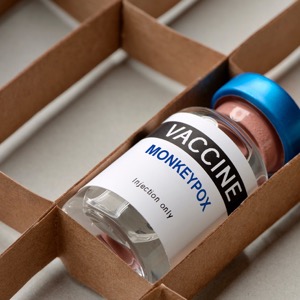
HHS is able to offer the first dose of the MPV vaccine, Jynneos (Bavarian Nordic), because the FDA’s emergency use authorization allowing intradermal administration increased the number of doses in each vial of vaccine by up to fivefold, according to Mr. Fenton.
“Overall, as of today, HHS has delivered nearly 1 million doses of vaccines to states and cities,” Mr. Fenton announced. “We rapidly scaled up supply of vaccine out in the field, and we are working to meet demand wherever we may find it.”
Starting Aug. 22, an additional 1.8 million doses of vaccine will be available to jurisdictions that are adopting the intradermal administration of vaccine, and those that have used 90% of their current supply of vaccines can order more doses.
“We’re focused on helping states and local partners turn these doses into vaccinations, because more shots in arms is how we get the outbreak under control,” he said.
In addition, HHS will be shipping 50,000 courses of tecovirimat (SIGA Technologies), commonly called TPOXX, across the country. “That’s nearly five times as many treatment courses than confirmed cases in the U.S.,” Mr. Fenton said.
“Starting next week, jurisdictions will be allocated courses of TPOXX using a formula that takes into account both the number of cases in their jurisdiction and the number of individuals who have the highest risk of contracting the virus, including individuals who have HIV or other immunocompromised conditions,” explained Dawn O’Connell, the assistant secretary of the Administration for Strategic Preparedness and Response.