

By Landon Gray
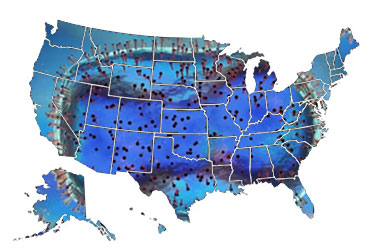
On Monday, Aug. 22, Wyoming became the 50th state to report a case of the monkeypox virus (MPV).
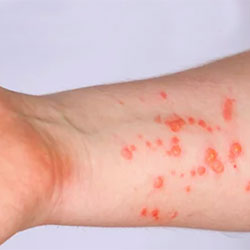
The current MPV outbreak now covers the entire United States, with more than 15,000 cases since May 17, but fortunately still not associated with any mortalities. Most cases are being reported in men who have sex with men aged 31 to 35 years. Most patients present with a rash, fatigue, fever, chills and muscle aches.
However, the CDC advises that regardless of sexual orientation or gender identity, anyone who has been in close, personal contact with someone who has MPV is at risk. This includes:
- direct contact with an infected person’s lesions, rash or bodily fluids;
- touching surfaces, objects or fabrics (i.e., clothing, bedding or towels) that have been used by someone with MPV; and
- contact with respiratory secretions from an infected individual.
It is also possible to contract the virus from infected animals, either by direct contact—such as being bit or scratched—or by preparing or eating the meat or using byproducts from an infected animal, according to the CDC.
Researchers are still studying and learning all the ways the virus is transmitted, for example, whether MPV can spread asymptomatically; how often it is transmitted by respiratory secretions, and when a person is more likely to be contagious through the same secretions; and whether MPV can be transmitted through semen, vaginal fluids, urine or feces.
This is the first time this many cases and clusters of MPV have been reported simultaneously in non-endemic and endemic countries in vastly differing geographic areas, according to the World Health Organization. According to the WHO, just under 34,000 cases have been reported worldwide as of Aug. 23. The WHO is collaborating with health authorities to prevent further spread of MPV, and issuing guidance to help countries on surveillance, laboratory work, clinical care, and infection prevention and control. The WHO also is issuing guidance on risk communication and community engagement targeted to inform at-risk communities as well as the general public about MPV and how to stay safe.
“Last week, the FDA and CDC acted to allow the Jynneos [modified vaccinia Ankara, Bavarian Nordic] vaccine to be administered intradermally, increasing the number of doses in each vial of vaccine by up to fivefold,” said Robert J. Fenton Jr., the White House National Monkeypox Response coordinator, on Aug. 18, during a press teleconference briefing by the White House Monkeypox Response Team and public health officials. “With the announcement, it increased our existing supply significantly without compromising safety or effectiveness.”
He added that the response team is already aggressively increasing access for jurisdictions to move more vaccine supply.
The response team is focused on operationalizing the FDA’s decision, Mr. Fenton said. “Since last week’s announcement, the CDC has been working hard to provide help to providers and clinicians with training and other resources to administer the intradermal vaccines.”